Which car should you rent in Morocco? Economy, SUV or automatic
Economy car, SUV or automatic? How to match your rental car to Moroccan roads, from Agadir's coast to the Atlas passes and the paved roads to the desert.
7 min read
What is the best car to rent in Morocco?
The best car is the one that matches your route. Morocco's main roads are paved and well maintained, so you do not need a 4x4 for a classic trip: a small car handles the coast, the cities and the motorways perfectly, while an SUV adds comfort and ground clearance for mountain and desert roads.
Three questions decide it: where you will drive, how many people and suitcases you carry, and whether you can drive a manual. The table at the end of this article sums up the right choice for each type of trip.
Is an economy car enough for Agadir and the coast?
Yes. For Agadir, Taghazout, the coast road to Essaouira and the A7 motorway to Marrakech, an economy car is the smart choice. It is cheap to rent and to fuel, easy to park and comfortable at the 120 km/h motorway limit.
The Dacia Logan is the classic here: it was the best-selling car in Morocco in 2025, so mechanics and parts are everywhere, and its boot of about 510 litres is unusually large for its class. A city car like the Peugeot 208 is even easier in town but has a smaller boot of about 300 litres. Day trips such as Paradise Valley are also fine in a small car if you drive slowly on the narrow sections.
Do you need an SUV for the Atlas mountains?
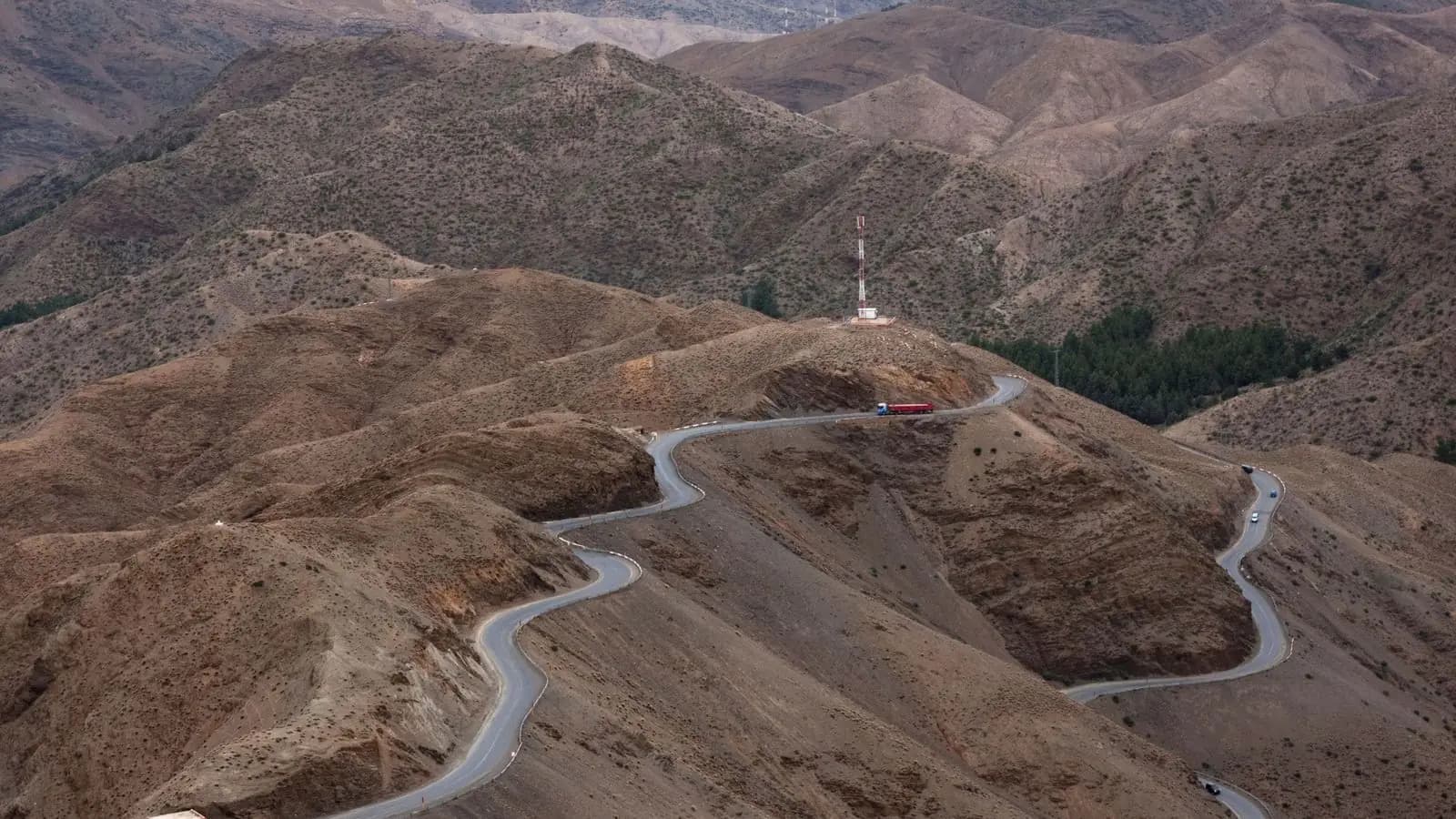
No, but you will enjoy one. The big passes, Tizi n'Tichka on the N9 and Tizi n'Test on the R203, are paved and driven daily by small cars, buses and trucks. What an SUV adds is a higher driving position for seeing over bends, a stronger engine for long climbs and more clearance over potholes and the occasional rockfall after rain.
If you plan several days in the High Atlas or the Anti-Atlas around Tafraout, or a long road trip on secondary roads, an SUV such as the Dacia Duster or Hyundai Tucson is worth the extra cost. For a single drive on the A7, as in our Agadir to Marrakech guide, an economy car is all you need.
Which car for desert roads to Zagora or Merzouga?
An SUV, mainly for comfort over long distances. The roads to Ouarzazate, Zagora and Merzouga are paved, but the drives are long, crosswinds are frequent and the edges of the road can be broken or covered with sand. A Duster's ground clearance of about 21 cm, against roughly 13 to 16 cm for a typical saloon, makes these edges and the many speed bumps less stressful.
A 4x4 is only needed to leave the tarmac, and rental cars must stay on paved roads: driving on tracks, beaches or dunes is not allowed at Miles Cars and is not covered by insurance. For the dunes, park at your camp or hotel and book a local 4x4 or camel excursion. Our guide to driving from Agadir to the Sahara covers the route.
Manual or automatic: which should you choose?
Choose a manual if you are comfortable with one; choose an automatic if you are not. Most rental cars in Morocco are manual, so automatics are fewer and usually cost more, often around 15 to 40 percent more than the equivalent manual.
An automatic is worth it if you rarely drive a manual at home, as is common for North American visitors. Learning a clutch on a steep hairpin or in Marrakech traffic is not a good idea. Because supply is limited, book an automatic as early as possible, especially for school holidays and the winter high season.
How much space do you need for passengers and luggage?
Count suitcases, not just seats. Most economy cars and compact SUVs have five seats, but five adults with large suitcases will not fit comfortably in either. As a guide:
- 1–2 people: any economy car; a city car like the Peugeot 208 if you travel light
- 3–4 people with medium bags: a Dacia Logan, thanks to its large boot, or a Dacia Duster
- 4 adults with large suitcases or a long road trip: a larger SUV such as the Hyundai Tucson
- Families with a baby: add a child seat when you book, and allow boot space for a pushchair
Diesel or petrol: which is cheaper in Morocco?
Diesel usually is, thanks to lower consumption. In 2026, diesel (gasoil) and petrol (essence or sans plomb) have both cost around 15 to 17 dirhams per litre, so the saving comes from the engine: a diesel compact typically uses less fuel than the same car with a petrol engine, which adds up over a long road trip.
Always check which fuel your car takes before the first fill-up, and remember to return it at the same level. Our guide to fuel, tolls and parking in Morocco gives the current prices and toll costs.
Which car is easiest to park in Moroccan towns and medinas?
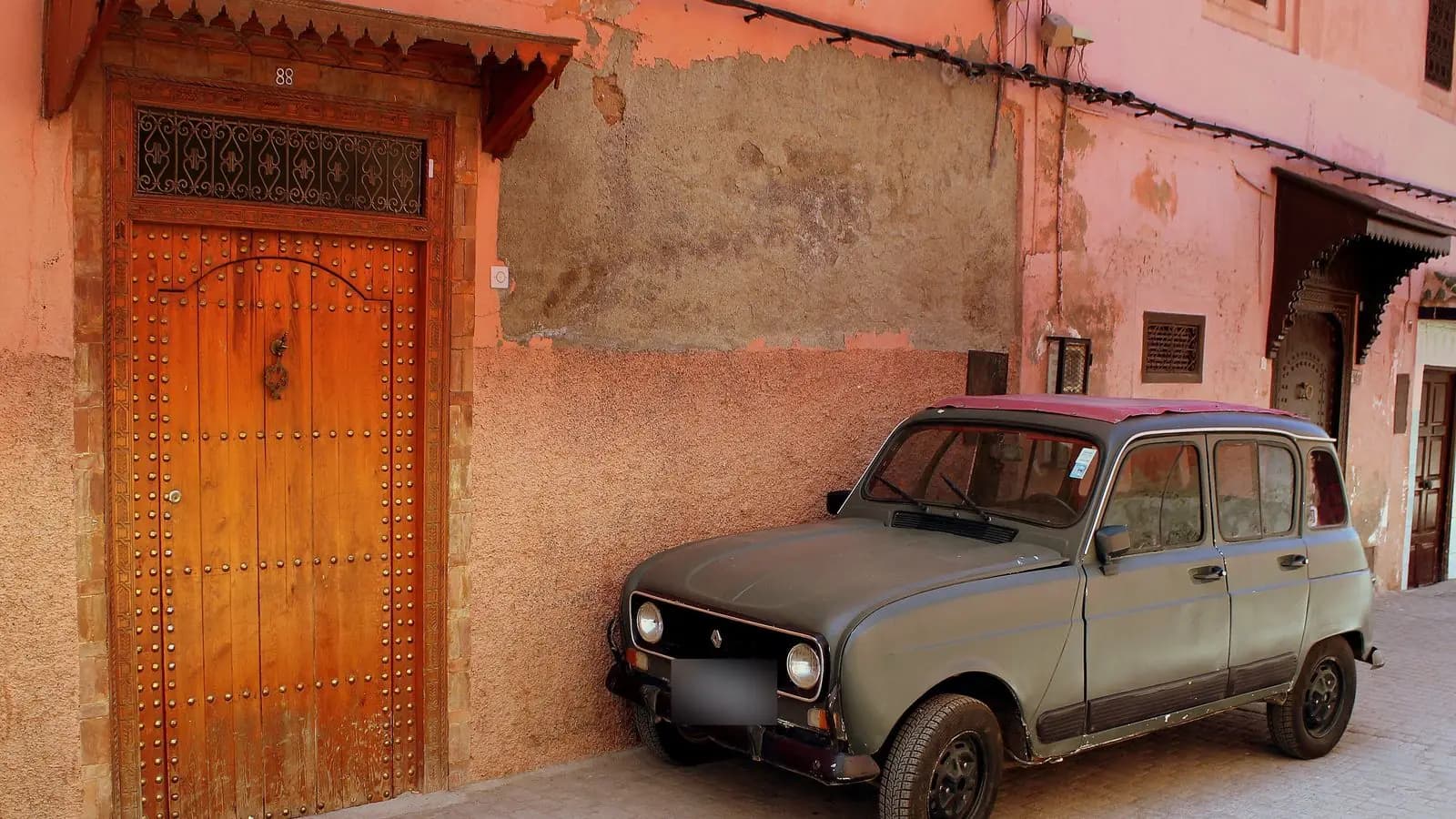
The smaller, the better. Medina streets in Marrakech, Essaouira or Taroudant are narrow, crowded and often closed to cars, so the best plan is to park outside the walls in a guarded car park and walk in. A compact car fits far more easily into tight spaces and the narrow streets around the medinas.
Expect speed bumps (ralentisseurs) at the entrance to almost every town and village, sometimes without warning signs. Slow down to walking pace over them whatever you drive, as damage to the underbody is excluded from most insurance. Read more in our driving in Morocco guide.
Which Miles Cars car should you book?
Miles Cars rents economy cars (such as the Dacia Logan and Peugeot 208), SUVs (such as the Dacia Duster, Hyundai Creta and Hyundai Tucson) and automatics, delivered free at Agadir airport or your Agadir hotel. Mileage is unlimited, there is no deposit and you pay on delivery.
Not sure which one fits your trip? Send us your route on WhatsApp or book your car online and choose the category that matches the table below.
Which car for which trip in Morocco
Agadir, Taghazout and the coast
- Recommended car
- Economy (Dacia Logan, Peugeot 208)
- Why
- Cheap to run, easy to park, enough power for coastal roads
Motorway to Marrakech or Essaouira
- Recommended car
- Economy or compact SUV
- Why
- Paved, well-kept roads; economy is the best value
Atlas passes (Tizi n'Tichka, Tizi n'Test)
- Recommended car
- SUV (Dacia Duster, Hyundai Creta)
- Why
- More power on climbs, better view and clearance
Paved roads to Zagora or Merzouga
- Recommended car
- SUV (Dacia Duster, Hyundai Tucson)
- Why
- Comfort over long distances, broken road edges, speed bumps
4 adults with large luggage
- Recommended car
- Large SUV (Hyundai Tucson)
- Why
- Space for passengers and suitcases
Driver not used to a manual
- Recommended car
- Automatic
- Why
- Easier in traffic and on steep hairpins; book early
Frequently asked questions
Do I need a 4x4 to drive in Morocco?+
No. The main routes, including the Atlas passes and the roads to the desert, are paved. A 4x4 is only needed off the tarmac, and rental cars must stay on paved roads.
Is a Dacia Logan good for a Moroccan road trip?+
Yes. It is Morocco's best-selling car, with a large boot of about 510 litres and parts available everywhere. For many days in the mountains, a Dacia Duster is more comfortable.
Are automatic cars available in Morocco?+
Yes, but most rental cars are manual, so automatics are fewer and cost more. Book an automatic car early, especially in high season.
Can I drive a rental car to the Sahara dunes?+
You can drive to Merzouga or Zagora on paved roads, but not onto the dunes or tracks. Leave the car at your camp and take a local 4x4 or camel excursion.
What is the cheapest car to rent in Morocco?+
An economy car such as the Dacia Logan or Peugeot 208 is the cheapest to rent and to fuel. See our guide to the cost of renting a car in Morocco.
Related guides
Book your car
Find your car