Driving in Morocco: Is It Safe and What Are the Rules?
Speed limits, police checkpoints, on-the-spot fines, roundabouts, tolls and night driving: what visitors really need to know before driving in Morocco, written from Agadir.
9 min read
Is driving in Morocco safe for tourists?
Yes, for most visitors driving in Morocco is safe and the best way to see the country, as long as you drive calmly and defensively. Motorways and the main national roads around Agadir are in good condition and signposted in Arabic and French.
The risk comes from behaviour rather than the roads themselves. Morocco recorded about 4,000 road deaths in 2024, and the authorities have stepped up radar and police controls since. Expect pedestrians crossing anywhere, scooters overtaking on both sides, donkey carts on rural roads and grand taxis that stop without warning.
Around Agadir, distances are manageable and traffic is lighter than in Casablanca or Marrakech, which makes it an easy place to start. Keep your speed down when entering villages and you avoid most of the problems visitors report.
What are the speed limits in Morocco?
Speed limits in Morocco are 120 km/h on motorways, 100 km/h on roads outside built-up areas and 60 km/h in towns, unless signs show otherwise. Signs always take priority, and limits of 40 km/h near schools, markets and busy centres are common. The table at the end of this guide sums up the main rules.
The classic trap is the approach to a village or checkpoint: the limit drops in steps, for example from 100 to 80, then 60 or even 40, often over a few hundred metres. Radars are frequently placed just after the lowest sign, so slow down as soon as you see the first one.
Other rules to know:
- Drive on the right, overtake on the left; never overtake across a solid line, a frequent reason for fines
- Seat belts are compulsory in the front and the back
- Phones: holding your phone while driving is forbidden; hands-free only
- Alcohol: the legal limit is 0.2 g/l of blood, far below most European limits, so treat it as zero
What happens at a police checkpoint?
At a police or gendarmerie checkpoint you slow right down, stop if asked and are usually waved through after a greeting. They sit at town entrances and exits, roundabouts and toll stations, marked by a stop sign, cones or a spike strip, and tourists are rarely held for more than a minute.
The one rule to respect absolutely: at a stop sign, come to a complete stop, wheels not moving, even if an officer seems to wave you on. Rolling through a stop sign at a checkpoint is one of the most common fines for visitors.
If you are stopped, stay polite, switch off the engine if asked and hand over your documents. Officers mainly speak Arabic and French, a few words of French help. Keep these in the car at all times:
- Your driving licence, plus an International Driving Permit if required (see our guide to the documents to rent a car in Morocco)
- Your passport
- The rental agreement, the registration document (carte grise) and the insurance certificate, which your rental company provides
How much are speeding fines, and can you pay on the spot?
Most traffic fines in Morocco are fixed amounts of 300, 500 or 700 dirhams depending on the class of offence, and they can be paid on the spot to the officer. Serious speeding, more than 50 km/h over the limit, is treated far more severely and can lead to court and licence suspension.
When you pay on the spot, you should receive an official receipt with the amount and the offence. Ask for it politely, check the amount and keep it until the end of your trip. Never offer money "to settle things": it is illegal and causes far more trouble than the fine.
Speed cameras are a separate issue. Morocco has fixed and mobile radars, and since June 2025 many fixed cameras flash in both directions. Camera fines go to the car's registered owner, so for a rental car the company receives them later and, as in most rental contracts, passes them on to the driver.
Who has priority at roundabouts in Morocco?
At roundabouts in Morocco, priority depends on the signs at each entry, so look before you enter. Where there is a give-way triangle or a stop sign at the entry, cars already on the roundabout have priority, as in Europe.
On some older roundabouts without signs, the general priority-to-the-right rule applies, which means cars entering can have priority over those already circulating. Large roundabouts in cities are sometimes run by traffic lights or a police officer, whose signals override everything else.
In practice, approach slowly, watch traffic on both sides, then commit clearly once you have a gap. Keep to the outside if you are taking the next exit, indicate before leaving and expect scooters to pass on your right. A short tap on the horn is a warning, not an insult.
Motorways and tolls: how do they work?
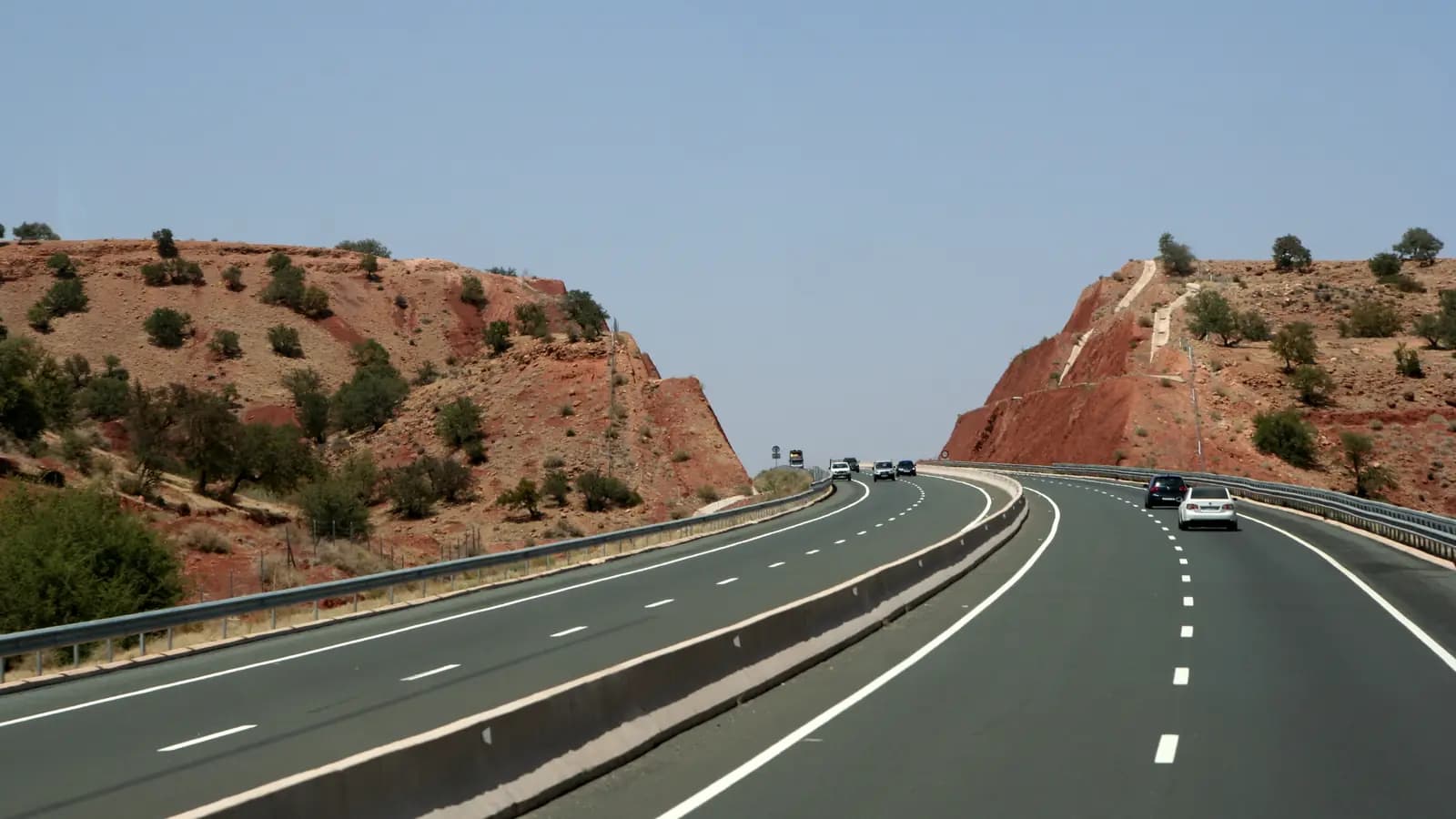
Moroccan motorways are toll roads run by ADM (Autoroutes du Maroc): you take a ticket when you enter and pay at the exit. From Agadir, the A7 links to Marrakech in about three hours and continues to Casablanca, and it is the fastest and safest way to cover long distances.
Pay at the manual lanes with cash in dirhams, which always works; keep some small notes handy. Lanes marked Jawaz are for the electronic toll badge only, so avoid them unless your car has one. For toll amounts and fuel costs on popular routes, see our guide to fuel, tolls and parking in Morocco.
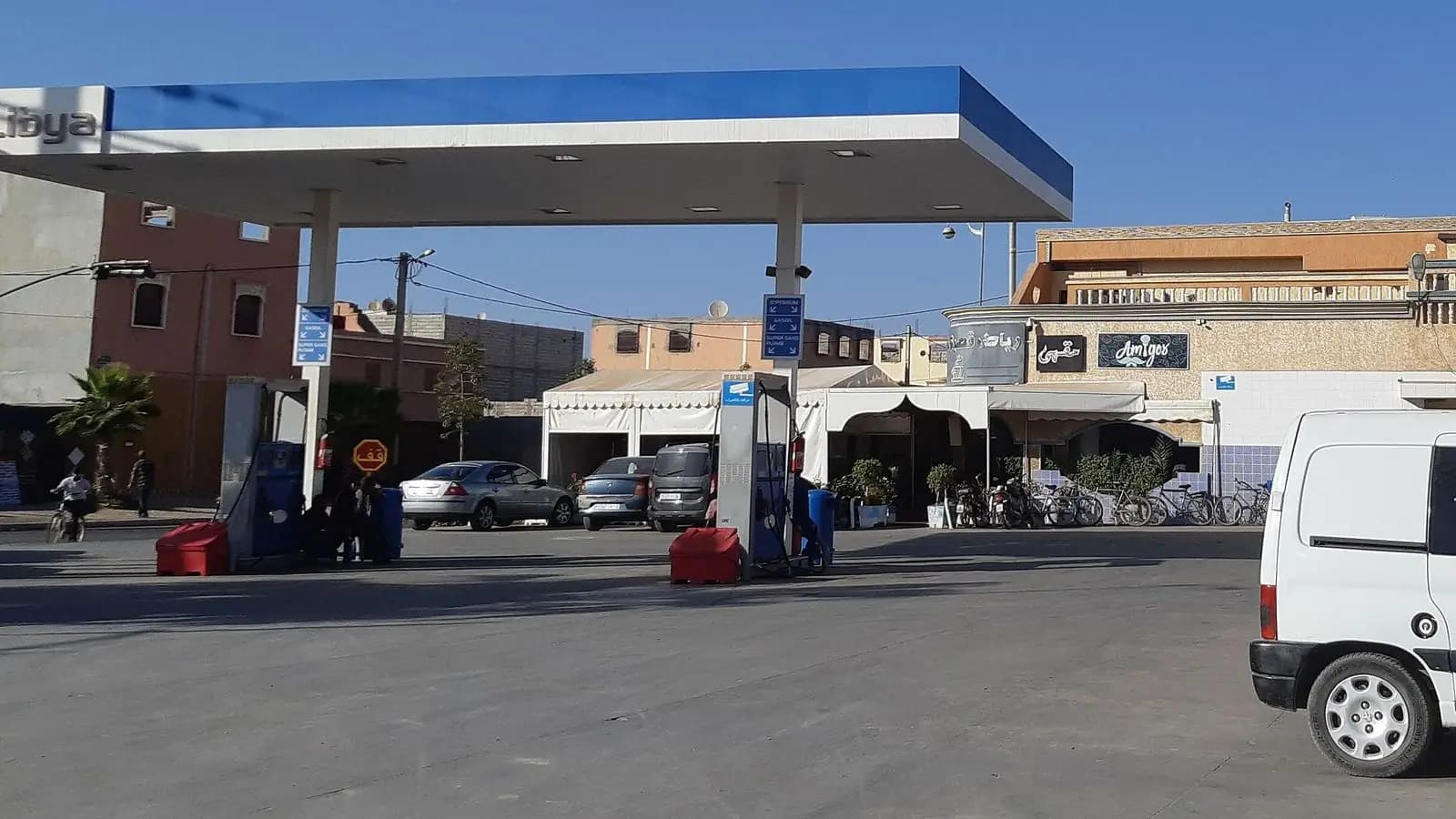
Service areas with fuel, cafés and toilets are spaced along the motorways. On national roads, stations are frequent near towns but can be far apart in the mountains, so leave the main network with at least half a tank.
Is it safe to drive at night or in the mountains?
Driving at night outside towns is best avoided in Morocco. Rural roads are mostly unlit, and you meet pedestrians in dark clothes, cyclists and scooters without lights, animals and oncoming drivers who do not dip their headlights. Plan long legs so that you arrive before dark.
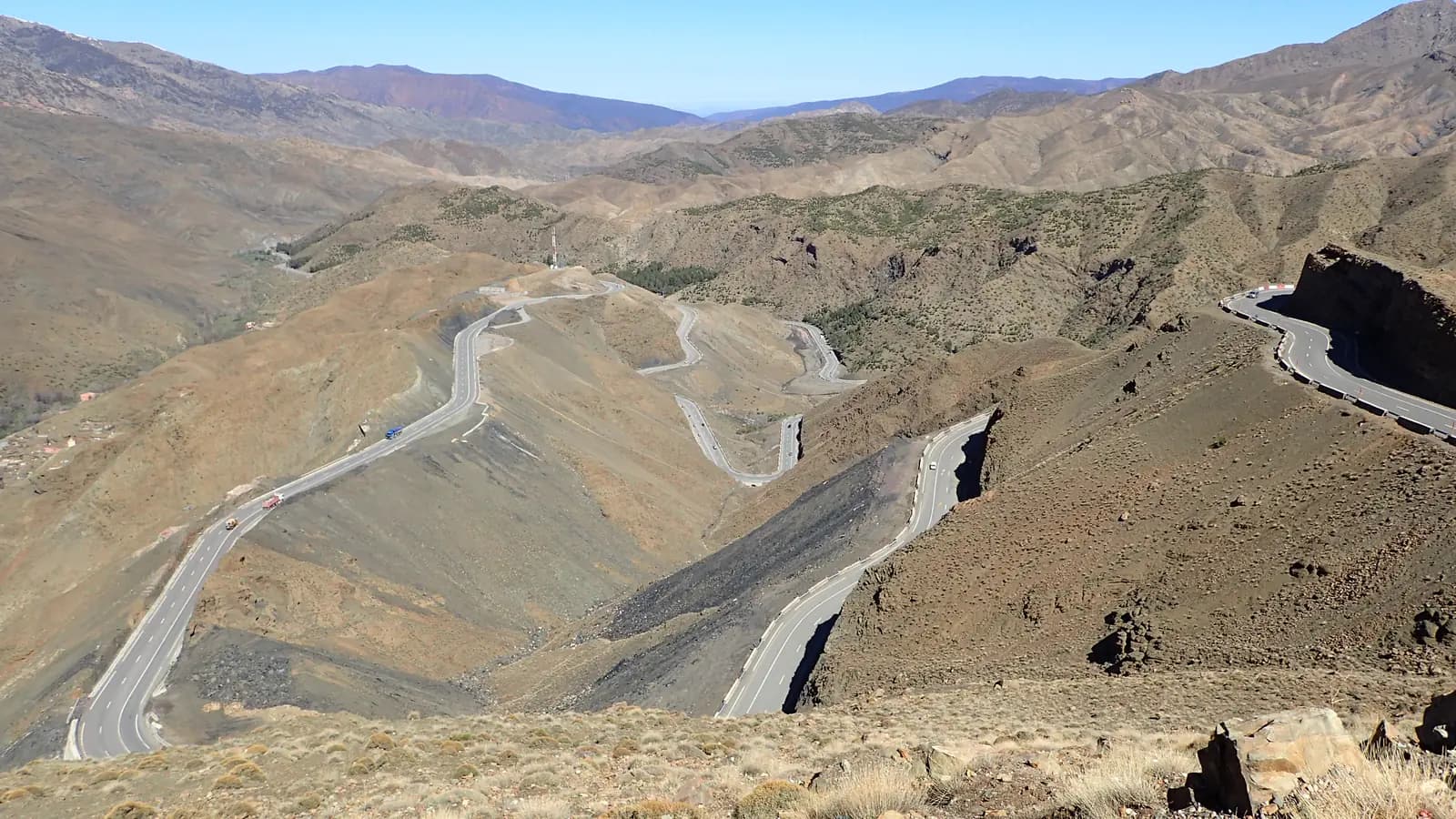
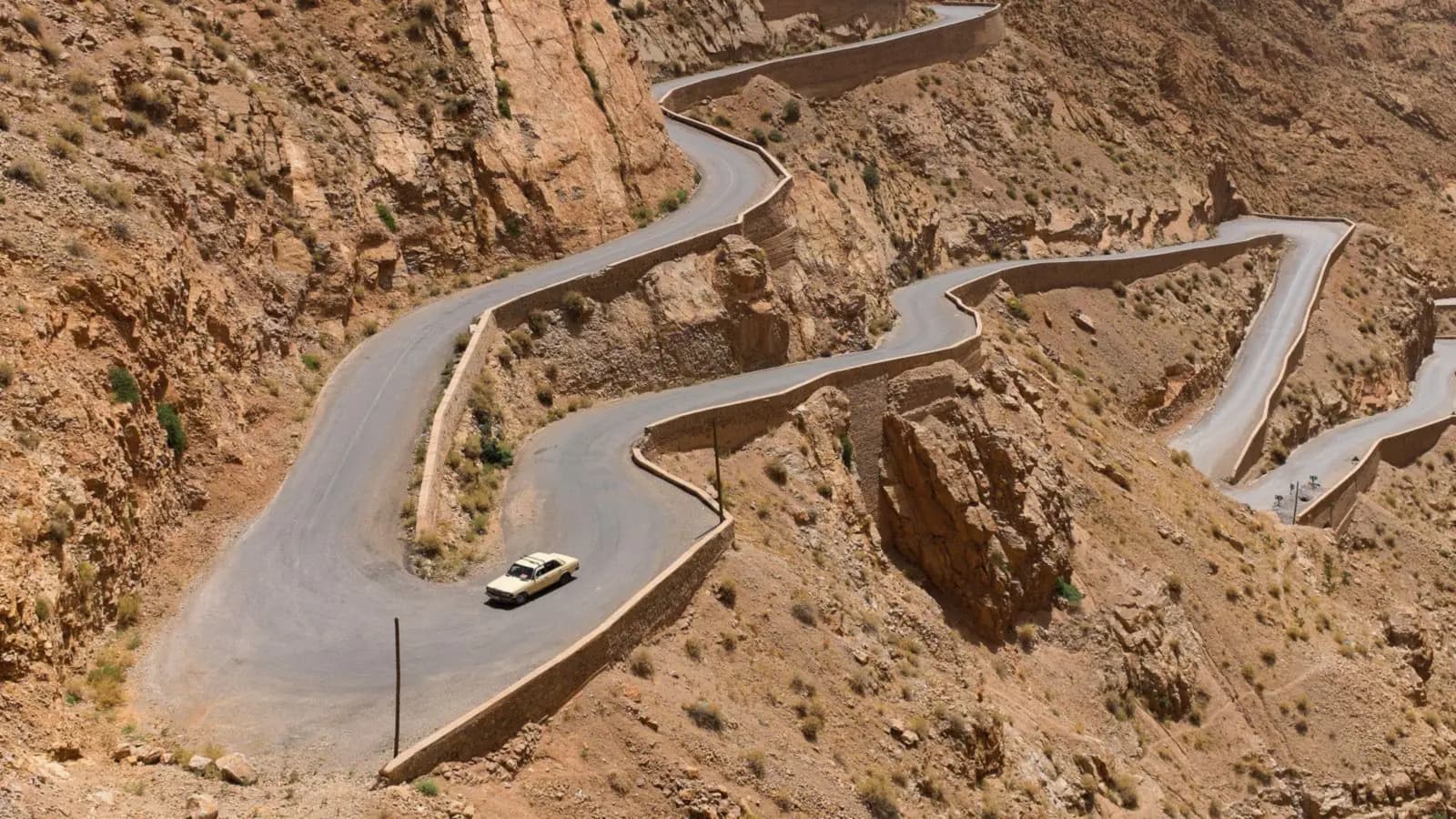
Mountain roads, such as the road to Paradise Valley or the routes over the High Atlas towards the south, are spectacular but narrow and winding. Use a low gear on descents, sound the horn lightly before blind bends and let faster local drivers pass. After heavy rain, watch for fallen rocks and flooded fords, and never cross a flooded oued.
For long trips such as Agadir to the Sahara by car, choose the right vehicle: a compact car is fine on asphalt, while an SUV gives more comfort and ground clearance on rough secondary roads.
How does parking work, and do you tip parking guardians?
In most Moroccan towns, a parking guardian (gardien) in a high-visibility vest watches the cars in a street or car park, and you give a few dirhams when you leave. A few dirhams is normal for a short stop and around 10 dirhams or a little more overnight; some ask for payment in advance at night.
Some city centres also have paid zones with ticket machines or official attendants. A few simple habits help:
- Never leave valuables visible in the car, even for a short stop
- Do not park along kerbs painted red and white, which means no parking
- In medinas, park outside the walls and walk in
- At hotels and riads, ask reception about the nearest guarded car park
What should you do after an accident or breakdown?
After an accident, stop safely, switch on your hazard lights, check for injuries and call your rental company straight away. If anyone is hurt or the other driver disagrees, call the police (19 in towns) or the gendarmerie (177 outside towns); 15 is the number for ambulance and fire.
For minor damage, a joint accident report (constat amiable) filled in with the other driver is usually enough, and the rental company tells you exactly what it needs. Take photos of both cars, the scene and the other driver's documents. Even for a small collision, it is wise to report it, as it protects you from later disputes.
What you pay afterwards depends on your cover. Our guide to car rental insurance in Morocco explains the excess and when zero-excess cover is worth it.
Renting a car in Agadir with Miles Cars
If your trip starts in Agadir, Miles Cars delivers your car free of charge at the airport or at your hotel, with no deposit and payment on delivery. Mileage is unlimited and basic insurance is included, with optional zero-excess cover for extra peace of mind.
Compare our cars for car rental at Agadir airport or book your car in a few minutes.
Driving in Morocco: key rules at a glance
Motorways (autoroutes)
- Limit or requirement
- 120 km/h
- Good to know
- Toll roads; pay cash at manual lanes
Roads outside towns
- Limit or requirement
- 100 km/h
- Good to know
- Limits drop in steps before villages and checkpoints
Towns and villages
- Limit or requirement
- 60 km/h
- Good to know
- Often 40 km/h near schools and markets
Alcohol
- Limit or requirement
- 0.2 g/l of blood
- Good to know
- Treat it as zero
Seat belts
- Limit or requirement
- Front and rear
- Good to know
- Fines apply to every unbelted occupant
Phone
- Limit or requirement
- Hands-free only
- Good to know
- Holding the phone is fined
Stop signs
- Limit or requirement
- Complete stop
- Good to know
- Wheels must stop, even at checkpoints
Fixed fines
- Limit or requirement
- 300, 500 or 700 MAD
- Good to know
- Payable on the spot against a receipt
Emergency numbers
- Limit or requirement
- Police 19, gendarmerie 177, ambulance 15
- Good to know
- Call your rental company too
Frequently asked questions
Do police in Morocco actually check the International Driving Permit?+
Rarely for licences in the Latin alphabet; most checks only look at your licence, passport and car papers. The UK government, however, says UK drivers need a 1968 IDP, so carry one if your country's advice says so. Details in our documents guide.
What are the speed limits in Morocco?+
120 km/h on motorways, 100 km/h on other roads outside towns and 60 km/h in built-up areas, often 40 km/h near schools and markets. Signs always take priority.
How much is a speeding fine in Morocco?+
Most fixed fines are 300, 500 or 700 dirhams depending on the offence, payable on the spot against an official receipt. Exceeding the limit by more than 50 km/h is far more serious.
What is the alcohol limit for drivers in Morocco?+
The legal limit is 0.2 g/l of blood, much lower than in most of Europe. In practice, do not drink at all before driving.
Is it safe to drive in Morocco at night?+
In towns, yes. Outside towns, avoid it if you can: roads are mostly unlit and you may meet pedestrians, animals and vehicles without lights.
Do I need to tip parking guardians?+
Yes, it is customary to give a few dirhams to the guardian when you leave, and a bit more, around 10 dirhams, for overnight parking.
Related guides
Book your car
Find your car